Nigerian 419 scammers fall far behind blue pill shifters for the trouser-dept failed.
When it comes to spam, the most popular topic is pharmaceutical, with 30.6 per cent of spams trying to flog you sexual drugs with 20.9 per cent imploring you to invest in some other medicines.
The figures come from Microsoft’s latest Security Intelligence Report, which found that over half of all spam is pharmaceutical related, with offers for drugs like Viagra hoping to tempt the erection-challenged.
Although they’ve become notable for the ever increasing rewards on offer (”let me transfer $320 million into your account and you can take 25%), the infamous 419 scams make up just 1.1 per cent of the total, with phishing scams taking up 2.5% of all spam and fake diplomas 1.9%.
Over Half Of All Spam For Pills And Viagra
Microsoft believes that the latest figures show something of a score draw between spammers and email services trying to block them:
“Overall, the amount of spam that successfully evades the blocking and filtering techniques used by services like Windows Live Hotmail and EHS to land in users’ inboxes has decreased dramatically from its peak a few years ago, though the trend has been much flatter over the last year or two, indicating a state of rough equilibrium between spammers and e-mail services.
“This should not be taken as a sign that the pace of advancement and adaptation has slowed on either side, but rather that both spammers and spam fighters continue to adapt to new techniques deployed by their opponents, creating a complicated sort of stalemate in which neither side has managed to gain the upper hand.”
Perhaps keen to fit in a cheap Carry On joke into the proceedings, Microsoft have produce a ‘ring of spam’ showing how the spam is distributed.
Read more: http://digital-lifestyles.info/2008/11/03/over-half-of-all-spam-for-pills-and-viagra/#ixzz0Sdxb1rLi
Wednesday, 30 September 2009

Google’s Gmail Now Freaking Out: Mis-marking Mail As Spam Read more: http://digital-lifestyles.info/2009/01/31/googles-gmail-now-freaking-out-mis-mar
As soon as Google fixed their misreporting “This Site May Harm Your Computer” search problem, we had reports of another problem with a Google service. This time GMail.
Gmail appears to be putting legitimate emails in the Spam folder and also showing the following warning message above many emails …
Warning: This message may not be from whom it claims to be. Beware of following any links in it or of providing the sender with any personal information.
The message has a right red background, so you’re not likely to miss it.
Best check your Gmail spam account for Non-spam mail.
Damage to Google?
There have been a number of comments on the previous story asking if this will damage peoples view of Google.
Given their generally unshakable reliability, it’s hard to imagine that these two incidents won’t have some detrimental effect on people’s confidence in Google.
Read more: http://digital-lifestyles.info/2009/01/31/googles-gmail-now-freaking-out-mis-marking-mail-as-spam/#ixzz0SdvE2rjO
Gmail appears to be putting legitimate emails in the Spam folder and also showing the following warning message above many emails …
Warning: This message may not be from whom it claims to be. Beware of following any links in it or of providing the sender with any personal information.
The message has a right red background, so you’re not likely to miss it.
Best check your Gmail spam account for Non-spam mail.
Damage to Google?
There have been a number of comments on the previous story asking if this will damage peoples view of Google.
Given their generally unshakable reliability, it’s hard to imagine that these two incidents won’t have some detrimental effect on people’s confidence in Google.
Read more: http://digital-lifestyles.info/2009/01/31/googles-gmail-now-freaking-out-mis-marking-mail-as-spam/#ixzz0SdvE2rjO
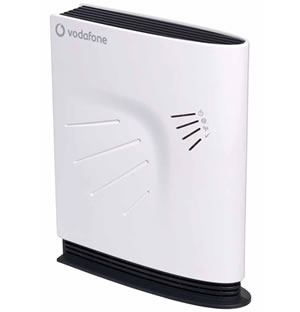
18 months ago, Digital-Lifestyles was one of the first, if not _the_ first, consumer-focused publications to report on Femtocells.
We were wowed by the concept – very strong cellular reception in your home, with the calls and data heading up your broadband connection.
As we said back in Nov 2007 …
Quite why this wouldn’t become common places is a hard one to understand. We can see no losers with this – the individual is getting full strength reception on their mobile phone; extending battery life; data services will be at full rate; the cellular operator is saving money on backhaul; the mobile subscriber is likely to get a considerable number of home-based calls bundled in for free.
Read more: http://digital-lifestyles.info/2009/06/24/vodafone-access-gateway-femtocell-1-july-uk-launch/#more-5841#ixzz0SdupXLQe

#geomob Event Review: Highly Recommended: On TomorrowWith the next #geomob event coming along tomorrow (30th June, deets below), we thought you’d like to know what it’s like and why you’d be doing yourself a favour for going along.
#geomob is a fresh London social meetup that, you won’t be surprised to hear, centres on services that use geo-locating data and those apps that run on mobile devices.
It’s run by Christopher Osborne an all over good guy and geo man around town.
Friendly
We popped over to its second meeting and were rather impressed.
The top floor of wallacespace in London, where it was then held, is a great venue – relaxed, well equipped with a staffed kitchen that served hot snacks and a fridge full of beer (thanks to Yahoo’s Geo group for funding it).
The assortment of relaxed seating quickly filled to a group of double the size of #geomob’s first meeting, made up of friendly tech bods.
Interesting speakers
There were four presenters are the event we went to, but they change each session.
Google’s Russell Middleton ran through the recent changes to their geo/map offerings, including auto location detection, working on static and mobile device.
The most potentially useful advance was Google’s static maps. They’re near instantly displayed as they’re flat JPGs, as opposed to the previous standard of needing to load map tiles and Javascipt.
Andrew Scott overviewed Rummble, a mobile recommendation service.
Alfie Dennon’s talk was a smorgasbord of projects built around the idea of constructive change through technology.
An example being StoppedClocks enabling member of the public to report when and where they see stopped clocks around the UK.
Once they are identified, a deal was done with a clock repairing company to carry out the repair work at cost.
The goodness doesn’t stop there. A college, that runs a clock repair course, has its students go out and practice their studies fixing the clocks – everyone gains.
One of the additional great things about this project is its achievement in encouraging / extracting input from people – people who would normally be really unlikely to enter information into a Web service.
Once these people have had their popped their online cherries, the likelihood is that they’ll be far more willing to contribute.
_FluidDB
The last presenter, Terry Jones *covered* the radically open and flexible FluidDB.
In essence, it’s a database that doesn’t have a rigid structure, because life and the information that comes at you during it aren’t structured.
When data is stored, those with a knowledge of databases will be surprised to hear that Objects don’t have owners. Objects have Attributes. Attributes have Owners.
We were pretty surprised that the assemblage of geeks weren’t all already aware of Terry’s FluidDB.
Given the exciting nature of the database, and I suspect, the sheer energy of Terry’s approach, he was ‘allowed’ to carry on beyond the normal 10 minutes presenters are allotted.
_Is #Geomob good?
Not only is the area of geo-location finally coming in to bloom, but event-founder Christopher Osborne and his compatriots have fashioned #geomob into a great, relaxed environment to swap geo and tech talk and experiences at.
Get your skates on though – there’s not many tickets left.
Read more: http://digital-lifestyles.info/2009/06/29/geomob-event-review-highly-recommended-on-tomorrow/#more-5843#ixzz0SdtYGvTB
Subscribe to:
Posts (Atom)